11 Nov 2026
In the UK, a dog out in public must wear a collar or tag showing the owner's name and address. That is the law, and a QR code does not replace it. What you can control is everything else: whether your phone number is on show, whether your pet's name is, and how easily a finder can reach you in the first few minutes. This guide covers what the law asks for, what you can leave off, and where a QR tag fits alongside the engraved one.
What a dog's tag must show by law
The Control of Dogs Order 1992 says that any dog on a road or in a public place must wear a collar with the name and address of the owner on the collar itself or on a plate or badge attached to it.
A few working dogs are exempt while they are working: police and armed forces dogs on duty, dogs used for herding or for emergency rescue, dogs used for sport or vermin control, packs of hounds and registered guide dogs. For everyone else, an owner whose dog is out without the details can be fined.
Two things the law does not ask for: your phone number and your pet's name.
What you can leave off the engraved tag
- Your pet's name. Many owners leave it off, because a stranger who calls a dog by its name looks like its owner and the dog will often go to them.
- Your phone number. It is not required. It is useful, but once it is engraved it is public to anyone who picks up the dog, and it is wrong the day you change numbers.
- Medical details. "Needs daily medication" is worth telling a finder. Your vet's details and the full history are not.
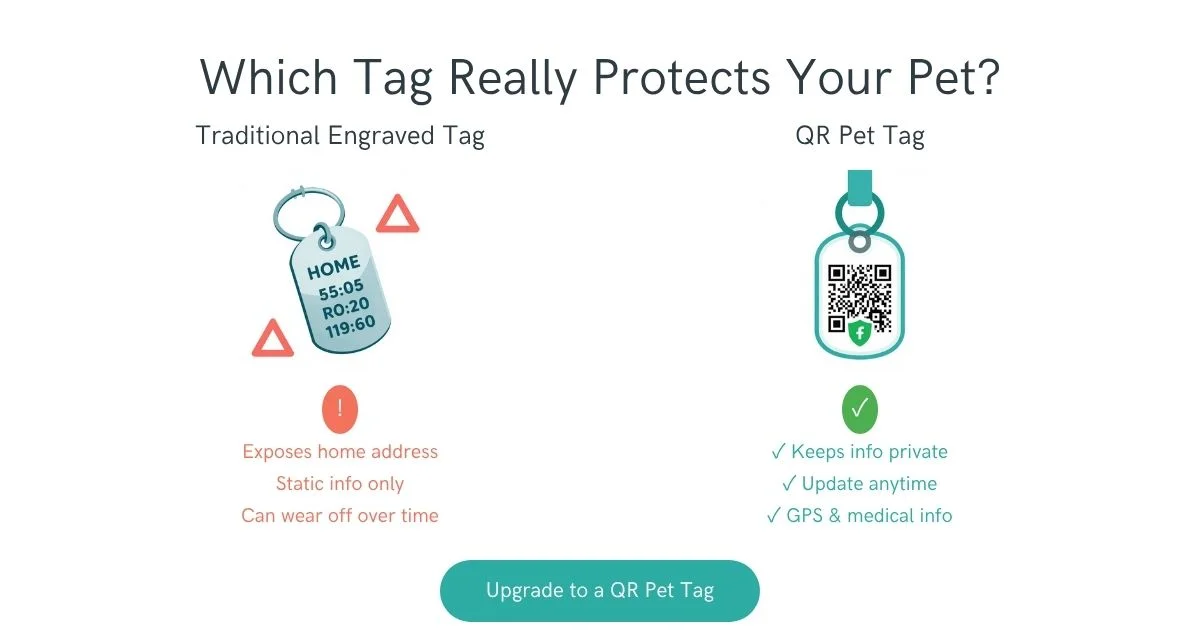
A short engraved tag with your surname and address meets the law and shows as little as possible. The QR tag carries the rest.
Where a QR tag fits
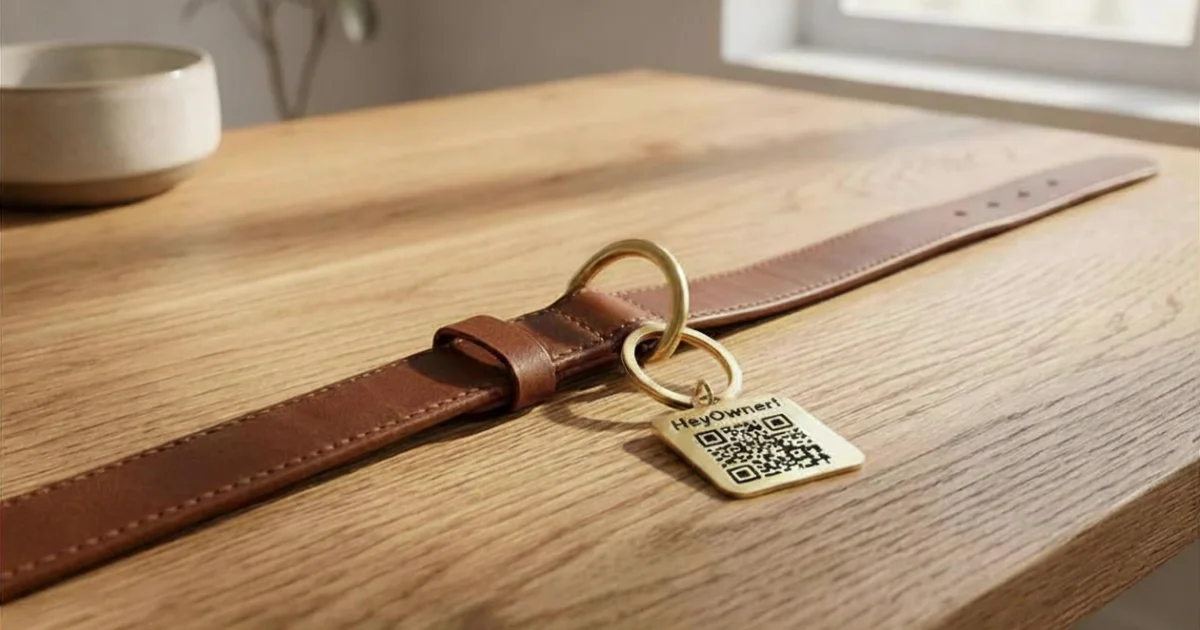
A QR tag sits on the collar next to the address tag. Whoever finds your dog points their phone camera at it, a page opens without an app, and they can send you a message straight away. You get it by email, and you can reply from your phone or any computer.
- Your number stays private. The finder never sees your phone number or email, so you can be reachable without engraving them.
- Details that never go out of date. Move house or change number and you update your account; the tag on the collar keeps working. The engraved address tag is the only thing you would need to replace.
- More than one person can hear about it. You can add a partner, a son or daughter or a dog walker to the tag, so the message reaches someone even if you are out of signal.
- A note for the finder. Up to 200 characters, for example "Nervous with men, please don't chase" or "Needs a tablet twice a day".
Cats: no collar law, but a microchip
There is no legal requirement for a cat to wear a collar. In England, cats over 20 weeks old must be microchipped, as dogs have been since 2016, and the details on the chip must be kept up to date. If your cat does wear a collar, use a quick-release one; a light QR tag on it lets a neighbour message you rather than taking the cat to a vet to be scanned.
Microchip, address tag and QR tag: what each one does
- Microchip: proves ownership and works if everything else is lost, but needs a vet or warden with a scanner.
- Engraved address tag: what the law requires for dogs, readable by anyone, but public and fixed.
- QR tag: the quickest way for an ordinary passer-by to reach you, without showing your number.
They are not alternatives. A dog with all three is covered whoever finds it: a vet, a warden or someone walking past.
Common questions
Is a QR tag enough on its own for a dog?
No. In a public place your dog still needs your name and address on the collar or a tag attached to it. Use the QR tag as well as the engraved one.
Do I have to put my phone number on my dog's tag?
No. The law asks for your name and address. A QR tag lets a finder reach you just as quickly without your number being on show.
What if the finder doesn't have a smartphone?
Then they can use the address on the engraved tag, or take your dog to a vet or the local council's dog warden to scan the microchip. That is why the three work best together.
See the pet tags, from £5.99 with UK delivery included.