11 Nov 2026
Never put your home address on a luggage tag
The safest luggage tag shows no home address at all: use an email address and a mobile number, your destination address for the trip, or a QR tag that lets a finder message you without seeing any of your details. A tag with your home address tells everyone around the carousel where you live and that you are not there.
This guide explains why, what airlines actually use to return a lost bag, and the three alternatives, including the popular "destination address only" approach and its one weak spot.
Why your home address on a luggage tag is a risk
A luggage tag is readable at arm's length in some of the busiest public places there are: check-in queues, carousels, coach bays and hotel lobbies. A home address on it gives a stranger three facts at once:
- where you live;
- that you are travelling, so the house may be empty;
- often your full name, which makes the address easy to check online.
None of that helps anyone return the bag. It only helps someone who wants to know where you are not.
What airlines actually use to return a lost bag
When you check a bag in, the airline attaches its own barcode tag and links it to your booking. If the bag goes astray, the airline traces it through that tag and contacts you using the details from your booking and the report you make at the baggage desk. The label you write yourself is the backup for when the airline's tag has been torn off, or for a bag that was never checked in, such as a cabin bag left on a train.
That backup needs one thing: a way for whoever is holding the bag to reach you. It does not need your home address.
3 safe alternatives to your home address
1. An email address and a mobile number
Your surname, an email address and a mobile number that works abroad are enough for an airline or an honest finder to get in touch. The downside is that your number and email are on show to everyone who reads the tag.
2. Your destination address, and its weak spot
Many seasoned travellers write only the address they are travelling to, usually the hotel. It is far better than a home address and it gets a bag found during the trip back to where you are staying.
The weak spot is timing. The destination address is only right until you check out. A bag that goes missing on the way home, or turns up days after the trip, points at a hotel you have already left. If you use it, change it for the return journey.
3. A QR luggage tag
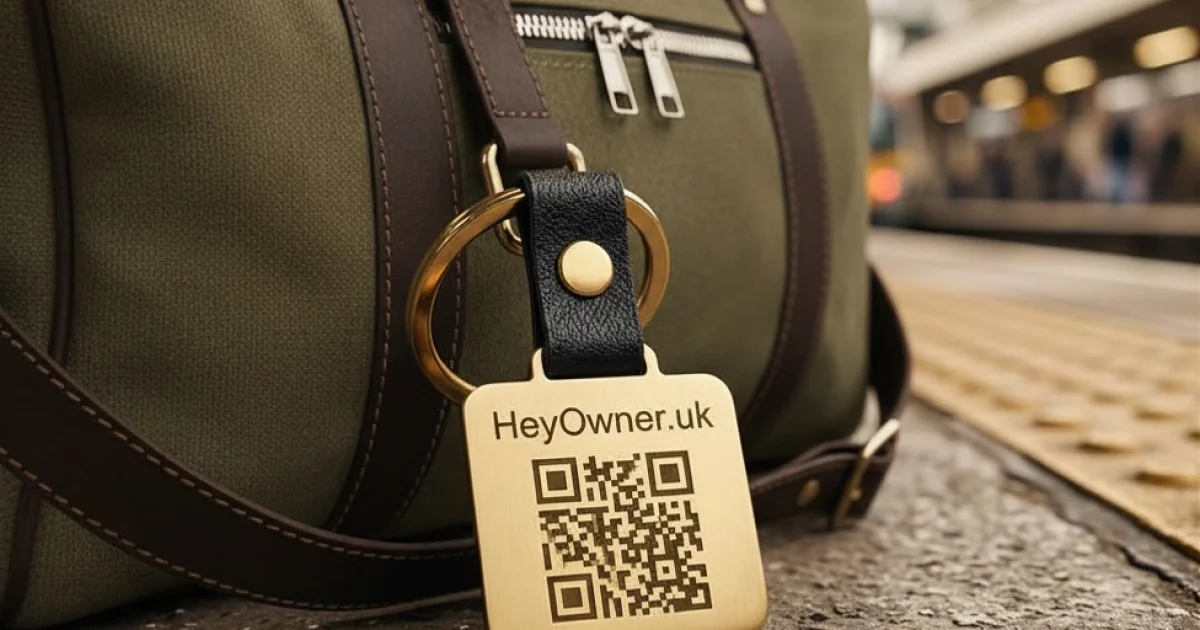
A QR tag shows no address, name or number. Whoever finds the bag points their phone camera at the code, a page opens without an app, and they send you a message. You get it by email and can reply from anywhere. You can also add a short note for finders, such as the hotel you are staying at this week, and change it from your phone mid-trip without touching the tag.
How QR luggage tags work
No battery, no electronics
A QR code is engraved or printed onto the tag. There is no battery or transmitter, so the airline rules about electronics and lithium batteries in checked bags do not apply to it.
What happens when someone scans it
The finder lands on a private messaging page. They can write something like "I found your bag at the Gate 14 seating area" and send it. You receive the message straight away, and they never see your name, address, phone number or email. You decide whether and how to reply. If you add a partner or travelling companion as a contact on the tag, they get the message too.
Checklist before your next trip
- Take your home address off every luggage tag, including old ones on bags you rarely use.
- Put a contact method inside the bag as well as outside, in case the outer tag is lost.
- If you write a destination address, change it for the journey home.
- Photograph your bag and its contents before you travel; it makes a missing-bag report much easier.
- Consider a QR tag on the outside and a QR sticker inside, so a finder can reach you without seeing your details.
It takes a few minutes, costs little and keeps your home address off a carousel full of strangers.
See the luggage tags, from £5.99 with UK delivery included.